Proof, Permission, and the Crew Plan for Storm-Damaged Trees
Start With Safety Before Scheduling Removal
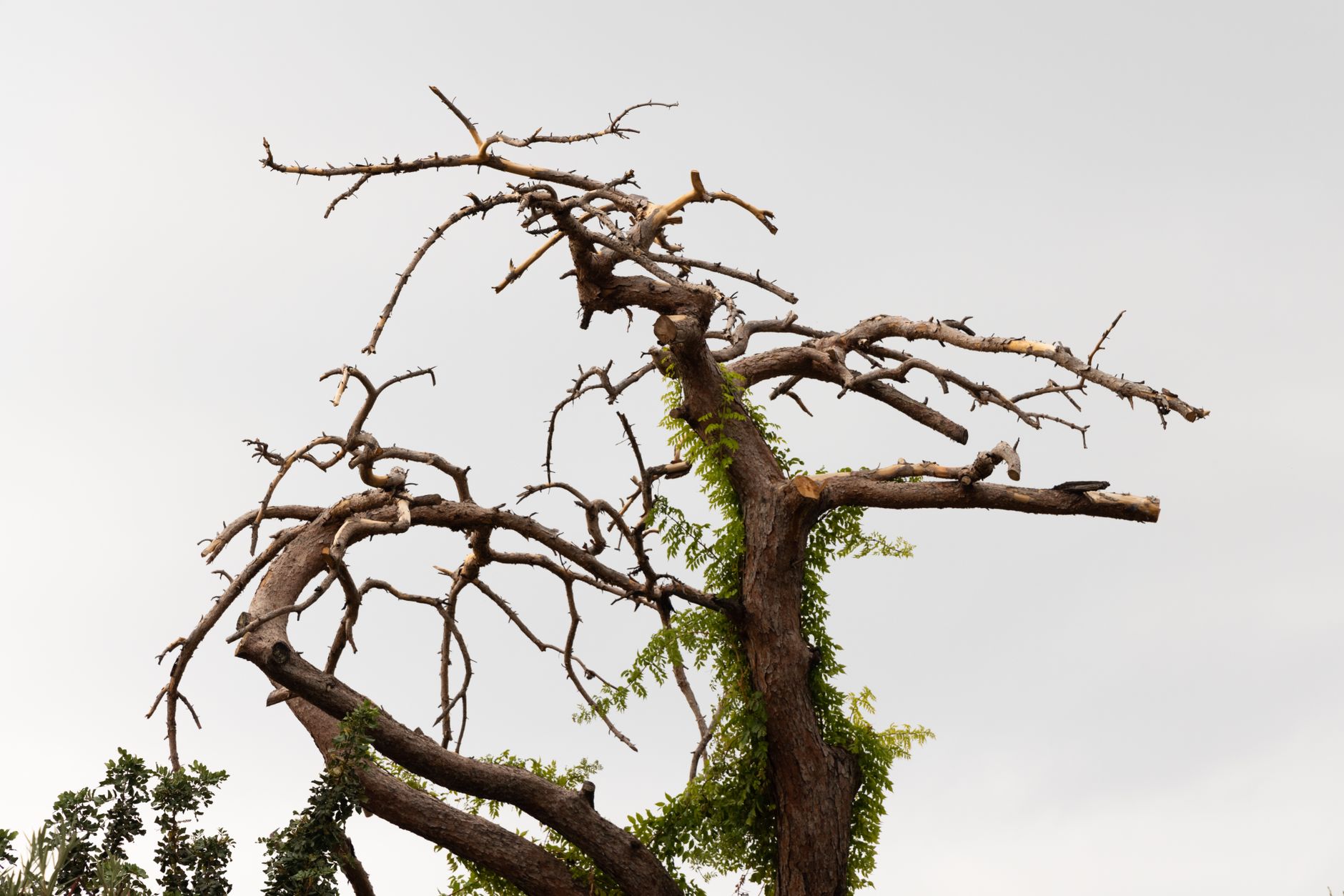
A broken limb hanging above a driveway in Longview, Texas, in Gregg County, should trigger a safety check, dated photographs, and a written removal plan before a crew arrives. The first safety check keeps people, pets, and cars outside the area below a hanging limb because a storm hanger can drop without warning. A crew should remove that wood with rigging rather than have someone pull it down by hand. The second check protects the property side of the job because a sound removal plan still depends on the required HOA and city questions being resolved.
Any limb touching or resting on a service drop or power line belongs to the utility first. Homeowners should keep away from that area, and no one should prune near it or allow a tree crew to climb until the line has been cleared. This safety boundary comes before close-range photos, contractor scheduling, or a written work order. A camera angle is never worth placing a person near unstable wood or energized lines.
Confirm the Property Permission Before Removal
Before removing any tree, Longview, Texas homeowners should read the HOA covenants and obtain written approval when the association requires it. The covenant check answers whether the planned removal needs association permission, while the arborist check answers what condition the tree presents. A technical evaluation does not replace required property approval. Keeping the two records separate helps a homeowner show that the work had both a safety basis and a valid permission trail.
A tree near a street, right of way, or easement requires a separate inquiry to the City of Longview, Texas. Homeowners should ask the city about that tree before cutting rather than assuming that a private work order covers public land or an easement. Rules vary, so the city and any HOA should be checked directly instead of relying on an assumption or another homeowner's experience. The homeowner should keep the response with the property records.
Keep the property record specific. Save the covenant language, written HOA approval when required, and a dated record of the city inquiry if the tree is in the relevant location. The homeowner can then show when permission was requested and what the answer was. This is useful if a contractor arrives before the property question has been answered. It also helps the homeowner distinguish a required approval from a general neighborhood rule that may not apply to the planned work.
Photograph the Damage Before Cleanup
Documenting storm damage before cleanup creates the clearest record of the tree, the break points, and the property damage. Homeowners should photograph the whole tree and the surrounding yard, then take closer images of each break point. Photographs should also show damage to structures, fences, or vehicles because those views belong in an insurance claim. The record should include the date, and the original files should be kept rather than only edited or shared copies.
A wide image establishes where the tree stands in relation to the house, street, fence, and neighboring property. A closer image records the break itself. Both views answer different questions for an arborist, an HOA, or an insurance claim. A zoomed view can capture a branch split without putting the homeowner beneath it. Date each image and keep the unedited version so the record remains clear.
If a tree is moving, twisted, or hanging in a way that could fall, personal safety comes before documentation. People and pets should stay away from the danger area, and vehicles should remain outside the area below the damaged wood. After the area is safe, take the photographs before branches, leaves, or other debris are moved. The images support an insurance claim, but they do not guarantee payment.
Ask an Arborist for a Condition Assessment
A hiring request should state whether an ISA Certified Arborist will assess the tree before any removal decision is finalized. This request turns the inspection into a defined part of the hiring process instead of an optional conversation. The assessment should identify the failed branch, the affected wood, and the reason the tree needs removal, targeted pruning, or continued monitoring. Each of those outcomes can be valid. A sound assessment should not be built on the idea that every leaning tree must come down.
A sudden lean after a storm needs a different check from a long-standing lean. A tree that has leaned for years often has a curved trunk where it corrected toward light. A straight trunk that suddenly leans, especially with fresh soil movement at its base, is an urgent hazard. The soil opposite the new lean can crack, mound, or heave after local storms saturate the clay and sandy loam soils around Longview, Texas. That movement can mean the whole tree is tipping at the roots. The arborist can judge this evidence, while the homeowner should not diagnose removal from one photograph.
Cracks and decay signs also belong in the assessment. A vertical crack through the trunk or below a large fork is a structural defect, not a cosmetic blemish. Water oaks are common storm-failure trees in East Texas yards, and internal decay can remain hidden while the canopy still looks full. Cavities, dead tops, or fungal growth on the trunk deserve evaluation. A shelf or bracket fungus near the trunk or root flare also calls for an arborist to judge how much sound wood remains, although one fungus does not automatically condemn a tree. A full green canopy does not guarantee that the tree is structurally sound.
Use a Hiring Checklist With Verifiable Answers
A complete hiring checklist answers four practical questions before work starts. Who will assess the tree? What proof of liability insurance will the crew provide? What does the written scope include? How will wood be lowered when removal happens beside a house? Written answers make it easier to compare the actual work rather than a general promise. The homeowner should obtain the answers before giving a start date.
Arborist Assessment
Ask whether an ISA Certified Arborist will assess the tree, and request the assessment result for the file. The assignment should be clear about who inspects the damage, what condition signs they will examine, and whether the planned work follows that assessment. If the answer is no, ask how the condition evaluation will be handled before approving removal.
Proof of Liability Insurance
Request proof of liability insurance before the work begins. The homeowner should review the proof and keep it with the written scope rather than rely on a verbal assurance. Requesting the document before work starts creates a clear hiring record and confirms that the contractor has supplied the requested proof.
Written Scope of Work
Get a written scope that says whether stump grinding and debris hauling are included. The scope should also identify the tree or trees covered, the removal work, and the debris plan. Those details prevent a broad promise about cleanup from standing in for a defined job. The homeowner can then compare the written work with the assessment and photographs before signing.
Rope-Lowered Removal Beside a House
For removals next to the house, confirm the crew will lower wood with ropes rather than drop it. The same rigging approach applies to a hanging limb because storm wood under tension can spring back violently when cut. The written scope should record the lowering plan for a removal beside a structure. This protects the house and nearby people from falling wood during the operation.
Do Not Let Schedule Pressure Define the Work
Storm damage deserves prompt attention, but urgency does not justify unsafe cutting or a scope built around guesswork. Routine structural pruning is generally best timed for late winter while Longview, Texas trees are dormant, and heavy pruning should be avoided during hot, dry summer weather. Storm damage, however, should be handled when it happens. The right question is not whether every damaged tree must be removed; it is whether the arborist's findings support removal, targeted pruning, or another specific action.
Do not accept topping as a way to make a tree storm resistant. Topping creates weakly attached sprout clusters that can fail in later storms and removes leaf area the tree needs. A sound pruning cut sits just outside the branch collar, and neither wound paint nor sealant stops decay. If removal is chosen, the written scope should describe removal rather than disguising it as crown reduction. That keeps the agreed work clear for the crew and the homeowner.
Debris handling is part of safe planning too. Pine logs and slash should be hauled away, chipped, or split promptly rather than stacked against healthy pines because fresh pine wood can draw bark beetles. The written scope should settle that debris question before work starts, particularly when the removal involves pine. This keeps cleanup decisions connected to the actual risk.
Keep Three Records Separate and Together
A complete storm-damage file has three parts: permission, condition evidence, and work authorization. The permission part contains the HOA covenant check, written approval if required, and the city inquiry for a tree near a street, right of way, or easement. The condition part contains dated photographs, arborist findings, and notes about a new lean, cracked trunk, dead limb, or root movement. The work authorization part contains proof of liability insurance, the written scope, and confirmation that crews will use ropes beside a house.
The records should remain easy to match. Use one file for approval, one for the damage record, and one for the hiring documents, or label those parts within a single file. Add dates to new information rather than replacing the original record. Completion photographs can document the final site condition without changing the before-cleanup evidence. The separate parts make it easier to find what the HOA, the arborist, and the crew each addressed.
Follow a Fixed Order From Inspection to Work
A fixed order reduces missed steps for homeowners in Gregg County. First, inspect from the ground and keep people, pets, and cars away from a hanger. Second, leave any line contact to the utility. Third, check HOA covenants and ask the City of Longview, Texas about a tree near a street, right of way, or easement. Fourth, photograph the tree, break points, and damaged property before cleanup. Fifth, ask whether an ISA Certified Arborist will assess the tree.
Sixth, request proof of liability insurance. Seventh, obtain a written scope that states whether stump grinding and debris hauling are included. Eighth, confirm that a crew will lower wood with ropes for a removal beside the house. Ninth, keep copies of the permission, photographs, assessment, insurance proof, and final scope. The order protects the homeowner from being pushed into a removal before the property check, evidence, and hiring details are complete.